













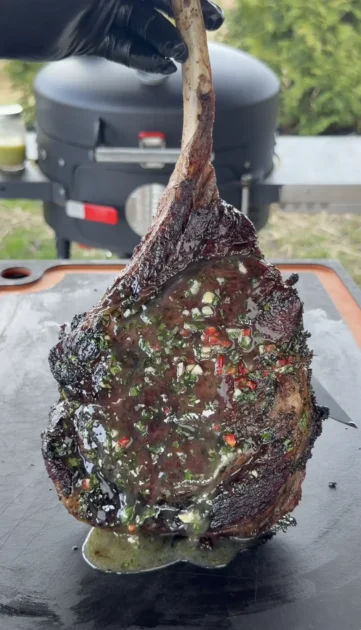

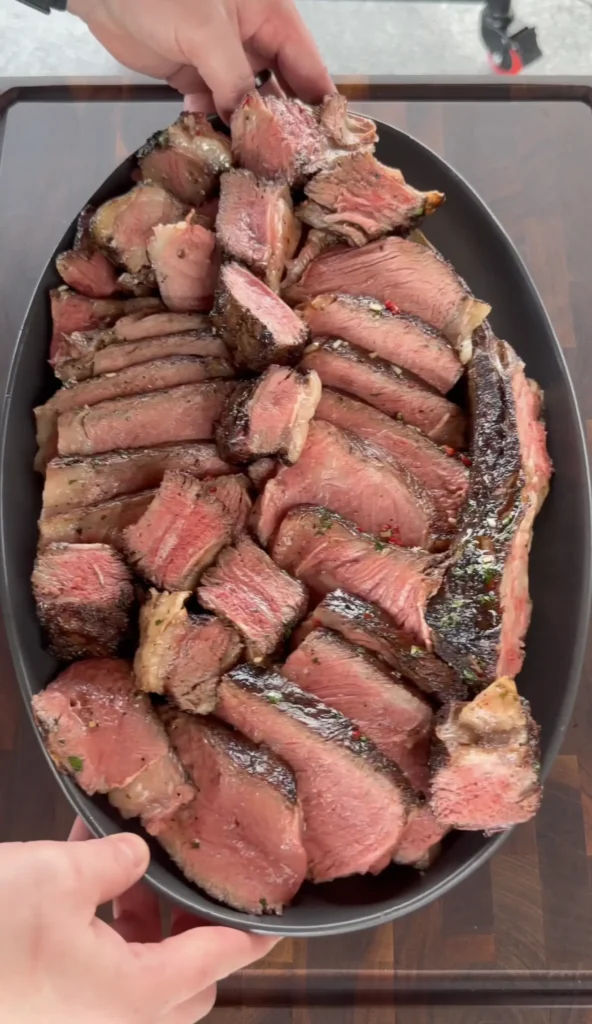
Smoked tomahawk steak is one of the most impressive cuts you can cook over live fire, and this recipe makes it even better with a coal-smoked Fresno honey garlic butter that adds layers of smoky, sweet heat to every bite. You are working with 2 to 2.5 pound bone-in ribeyes, seared first at 500 to 600 degrees for a deep crust, then finished with gentle smoke at 250 degrees until the internal temperature hits 125 degrees for perfect medium-rare. The coal-smoked butter uses a simple mason jar technique where a red-hot piece of lump charcoal infuses softened butter, Fresno peppers, honey, and garlic with real charcoal smoke in under two minutes. Total cook time is about an hour from start to finish, and each steak serves 2 to 3 people.
Why Searing First Creates a Better Tomahawk Steak
Most smoked tomahawk steak recipes use the traditional reverse sear, where you smoke the steak first and sear at the end. This recipe flips that approach. Searing first builds the crust when the surface of the meat is driest, which creates deeper caramelization and a more pronounced Maillard reaction. Consequently, you get a steakhouse-quality exterior without overcooking the edges.
How the Sear-Then-Smoke Method Works
The surface of a raw, dry-patted steak sears more efficiently than a steak that has already been in a smoker for 45 minutes. Moisture from the smoking process creates steam on the surface, which fights against crust formation. Therefore, searing a dry steak at 500 to 600 degrees for 2 to 3 minutes per side locks in a deep, caramelized bark before any moisture has a chance to escape.
After the sear, you move the steaks to indirect heat at 250 degrees. The lower temperature gently brings the center up to 125 degrees without pushing the exterior past the point of perfection. Additionally, the brief smoke exposure during this phase adds a subtle wood flavor that complements the charred crust rather than competing with it.
What Internal Temperature to Target
Pull the steaks at 125 degrees internal for medium-rare. Carryover cooking during the 10-minute rest will push the final temperature to 130 to 132 degrees. For reference, here is a quick temperature guide for tomahawk steaks:
However, medium-rare is strongly recommended for this cut. The heavy marbling in a tomahawk ribeye needs enough heat to begin rendering the intramuscular fat. Cooking below medium-rare leaves some of that fat unrendered, which means you are missing out on flavor and tenderness.
How to Make Coal-Smoked Butter (The Mason Jar Technique)
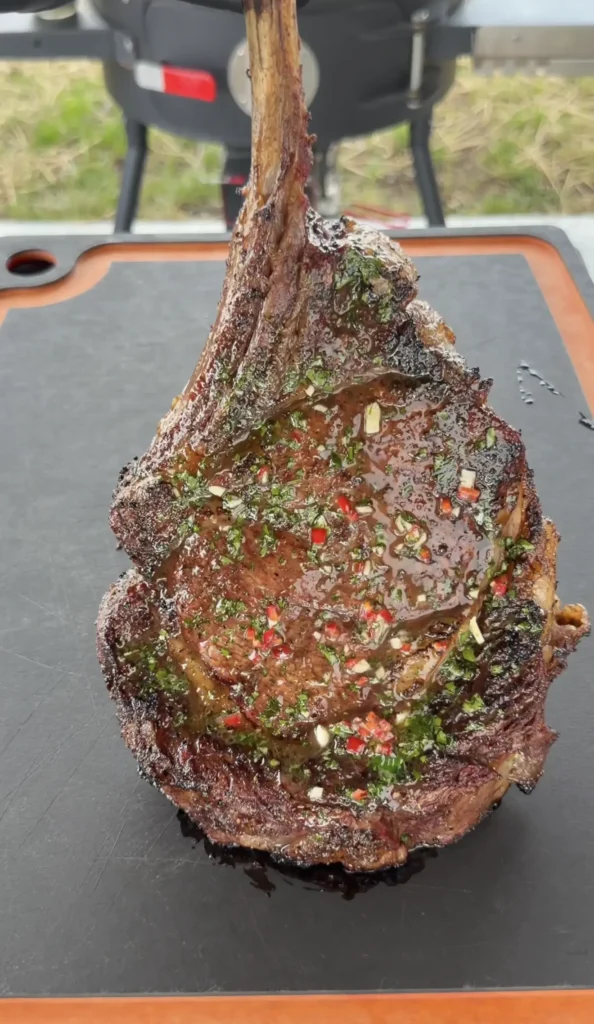
The coal-smoked Fresno honey garlic butter is what sets this grilled tomahawk steak recipe apart from every other compound butter you have seen. Instead of smoking butter on a grill rack (where it can burn or pick up bitter creosote), this method traps clean charcoal smoke inside a sealed mason jar for a quick, powerful infusion.
Why Lump Charcoal Matters
You must use natural lump charcoal for this technique. Briquettes contain binders, fillers, and sometimes lighter fluid residue that will leave an acrid chemical taste in the butter. Lump charcoal burns clean and produces pure wood smoke. Specifically, look for hardwood lump charcoal from oak, hickory, or mesquite for the best flavor.
Light a small piece in a chimney starter or directly on your grill until it is completely red-hot and lightly ashed over. The coal needs to be fully ignited so it produces clean smoke rather than sooty, incomplete combustion smoke.
The Infusion Process
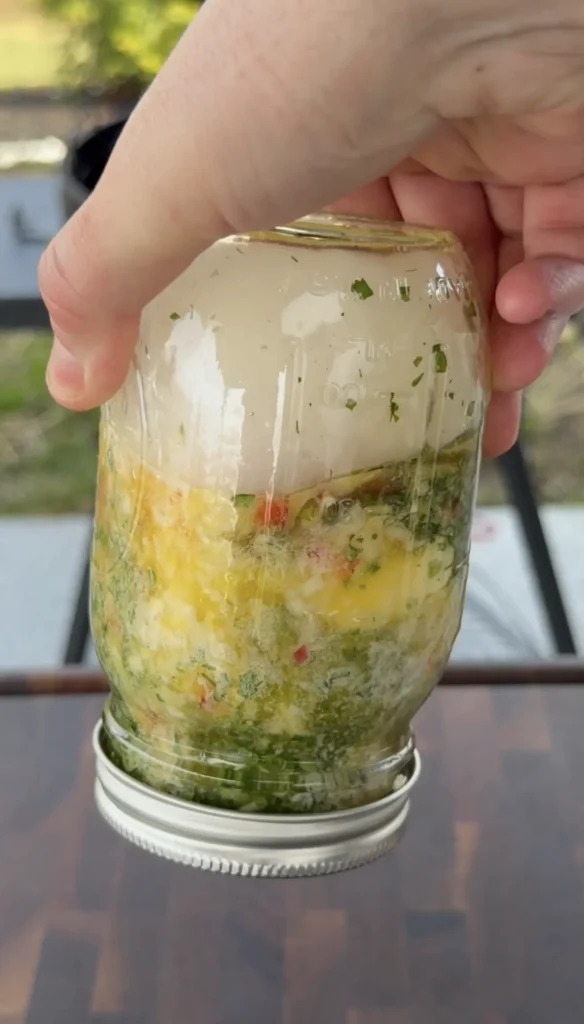
Combine softened butter, minced garlic, diced Fresno pepper, honey, lemon juice, salt, pepper, and parsley in a heat-safe mason jar. Leave 1 to 2 inches of space at the top. Using tongs, carefully place the red-hot coal directly into the jar on top of the butter mixture.
Immediately seal the lid tightly. The trapped heat and smoke will swirl inside the jar, infusing the butter with a deep charcoal aroma. Let the jar sit closed for 1 to 2 minutes. Afterward, open the jar, remove the coal with tongs, and stir the butter until smooth.
The result is a compound butter with genuine charcoal smoke flavor that you cannot replicate with liquid smoke or any other shortcut. Furthermore, the honey adds a subtle sweetness that balances the Fresno pepper heat, while the garlic and lemon juice round out the flavor profile.
What Is a Fresno Pepper and Why Use It
Fresno peppers are medium-heat chili peppers that range from 2,500 to 10,000 Scoville heat units. They look similar to red jalapenos but have a fruitier, slightly smokier flavor when ripe. In this butter, the Fresno adds a pleasant warmth without overwhelming the other flavors.
If you cannot find Fresno peppers at your grocery store, a red jalapeno is the closest substitute. You can also use a serrano pepper for more heat, or an Anaheim pepper for less. However, the Fresno is ideal because its natural smokiness pairs perfectly with the charcoal-infused butter.
Choosing and Preparing the Best Tomahawk Steak
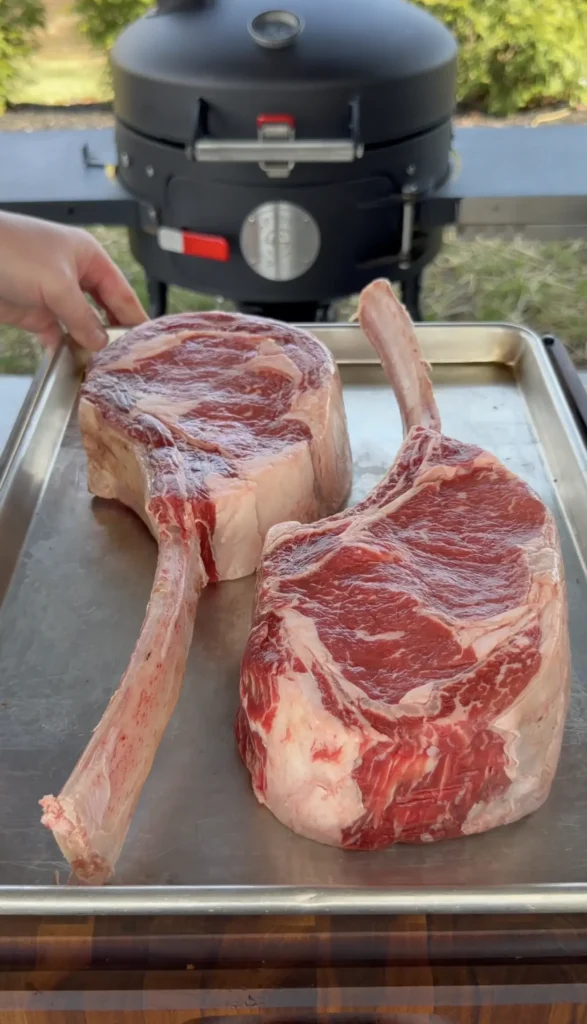
A tomahawk steak is a bone-in ribeye with the entire rib bone left intact and frenched (cleaned of meat and fat). The bone can extend 6 to 12 inches beyond the meat, giving it the tomahawk axe appearance. Underneath that dramatic presentation is the same heavily marbled, rich ribeye that makes this one of the most flavorful cuts on the entire animal.
What to Look For at the Butcher
Thickness matters more than weight. Your tomahawk steaks should be at least 2 inches thick for this sear-and-smoke method. Thinner steaks will overcook during the smoking phase before the interior reaches the target temperature. Most tomahawks weigh between 2 and 2.5 pounds each, which includes the bone weight.
Look for steaks with consistent marbling throughout the eye of the ribeye. Additionally, check that the cap (the outer section of fat and meat that wraps around the main eye) is intact and well-attached. The cap is the most flavorful part of the entire steak, so you want it firmly connected.
If you are sourcing premium beef, Linz Heritage Angus tomahawks deliver exceptional marbling and flavor. The dry-aged options from their Grill Nation collaboration are particularly well-suited for this recipe because the concentrated beef flavor stands up beautifully to the bold coal-smoked butter.
Seasoning and Tempering
Keep the seasoning simple. Coarse kosher salt, coarse black pepper, and garlic powder are all you need. The coal-smoked butter provides the flavor complexity, so the seasoning should focus on enhancing the beef rather than competing with it.
Pat the steaks completely dry with paper towels before coating them lightly with olive oil or beef tallow. Season generously on all sides, including the edges. Then let the steaks rest at room temperature for 20 to 30 minutes. This tempering step is important because it allows the surface to warm slightly, which promotes a better sear and more even cooking throughout.
The Best Equipment for Grilled Tomahawk Steaks
You can cook this smoked tomahawk steak recipe on any grill or smoker that gives you control over both high heat and low-temperature indirect cooking. The key is having the ability to sear at 500 to 600 degrees and then drop to 250 degrees for the smoking finish.
Charcoal Grill Setup
A Hasty Bake charcoal grill is ideal for this cook because the adjustable fire box lets you move from direct high-heat searing to indirect smoking without transferring the steaks to a different cooking surface. Set up a two-zone fire with all coals banked to one side. Sear directly over the hot coals, then move the steaks to the cool side and close the lid to finish with indirect smoke.
For additional smoke flavor during the finishing phase, add a chunk of oak or hickory wood to the coals right before you move the steaks to indirect heat. One fist-sized chunk is enough. You want subtle smoke, not heavy.
Pellet Grill or Smoker Setup
If you are using a pellet grill, preheat to the highest setting (usually 450 to 500 degrees) for the sear phase. After searing, drop the temperature to 250 degrees and let the steaks finish. Pellet grills produce consistent, mild smoke at low temperatures, which works well for this recipe.
Essential Tools
An instant-read meat thermometer is non-negotiable for thick steaks. Tomahawk steaks cook unevenly due to the bone, which conducts heat differently than the surrounding meat. Insert the probe into the thickest part of the ribeye, away from the bone, to get an accurate reading. A leave-in probe thermometer like the Meater+ allows you to monitor temperature without opening the lid.
How to Rest and Slice a Tomahawk Steak
Resting is not optional with a steak this large. Skipping the rest causes the juices to pour out the moment you cut into the meat, leaving you with a dry steak and a puddle on the cutting board.
Why 10 Minutes Is the Minimum
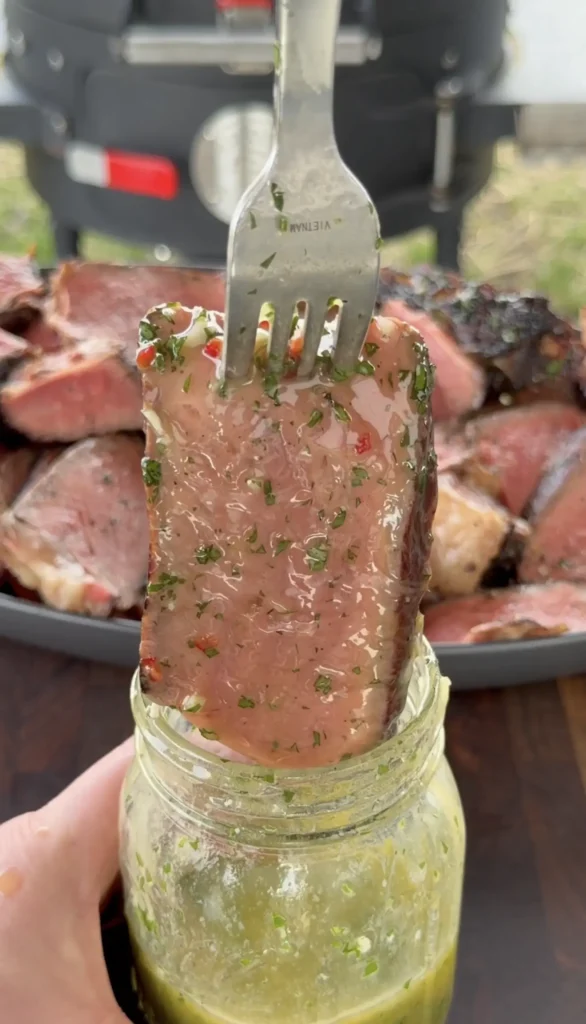
During cooking, the heat drives moisture toward the center of the steak. Resting allows that moisture to redistribute evenly throughout the meat. For a 2-inch-thick tomahawk, 10 minutes is the minimum rest time. You can go up to 15 minutes without the steak cooling too much, especially if you spoon the coal-smoked butter over the top while it rests. The butter melts into the crust and keeps the surface warm.
Slicing Against the Grain
A tomahawk ribeye contains multiple muscle groups, each with its own grain direction. First, slice the meat away from the bone by running your knife along the bone’s edge. Then, identify the grain direction of the main ribeye eye and slice perpendicular to it in half-inch-thick pieces.
The cap section that wraps around the outside may have a different grain direction. Separate it from the main eye and slice it independently. This extra step ensures every piece is tender rather than chewy.
Best Side Dishes for Smoked Tomahawk Steak
Tomahawk steaks are rich, buttery, and heavily marbled. The coal-smoked Fresno butter adds even more richness. Therefore, your sides should provide contrast through freshness, acidity, or simple char.
Sides That Work
Charred corn on the cob with a squeeze of lime cuts through the richness with sweetness and acid. Crispy smashed potatoes provide texture contrast. Grilled asparagus with a light lemon vinaigrette adds a clean, green element. A simple arugula salad with shaved parmesan and lemon dressing brings peppery freshness that pairs well with the steak.
Garlic bread or grilled crusty bread also works well for soaking up any butter that pools on the cutting board. For something more substantial, try grilled broccolini or a wedge salad with blue cheese dressing and crispy bacon.
Smoked Tomahawk Steaks
Coal-Smoked Fresno Honey Garlic Butter · Sear & Smoke Method
Use only natural lump charcoal for the coal-smoked butter technique. Briquettes contain binders and chemical additives that will leave a bitter, acrid taste in the butter. Light the coal until it is completely red-hot and lightly ashed over before placing it in the mason jar. The cleaner the coal burns, the cleaner and more pure the smoke flavor in your finished butter.
Step-by-Step Instructions
Step 1: Make the Coal-Smoked Fresno Honey Garlic Butter
Combine the softened butter, minced garlic, diced Fresno pepper, honey, lemon juice, kosher salt, black pepper, and chopped parsley in a heat-safe mason jar. Leave 1 to 2 inches of space at the top of the jar. Stir gently to distribute the ingredients without fully mixing.
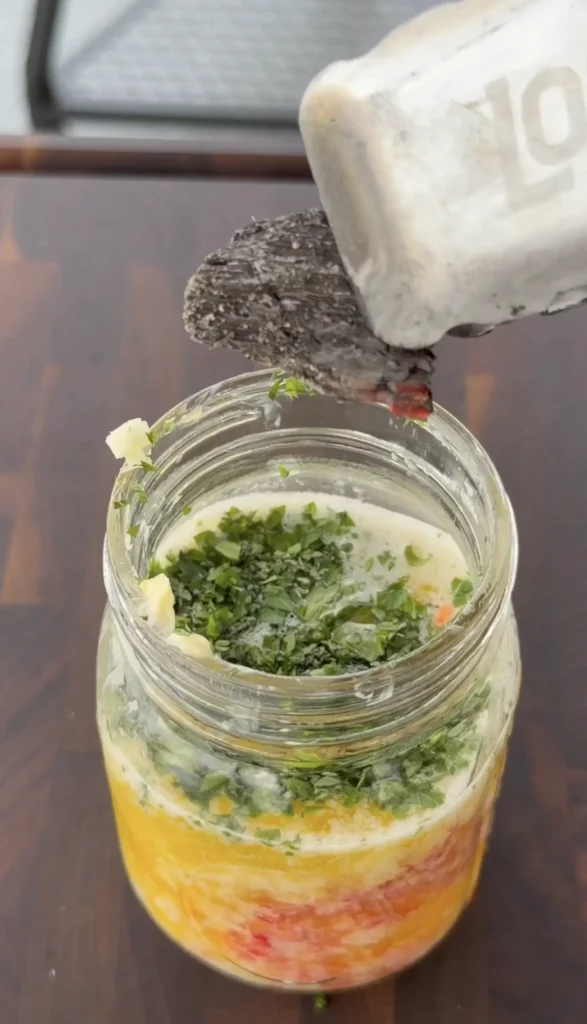
Light a small piece of natural lump charcoal in a chimney starter or directly on your grill grate. Wait until the coal is completely red-hot and lightly covered in white-gray ash. This takes about 5 to 7 minutes.
Using long tongs, carefully place the hot coal into the mason jar on top of the butter mixture. Immediately close the lid tightly. The coal will produce smoke that swirls inside the sealed jar, infusing the butter with a deep charcoal aroma.
Let the jar sit closed for 1 to 2 minutes. Open the jar and remove the coal with tongs. Stir the butter mixture until smooth and set aside at room temperature.
Step 2: Season the Tomahawk Steaks
Pat both steaks completely dry with paper towels. Removing surface moisture is essential for building a deep, caramelized crust during searing.
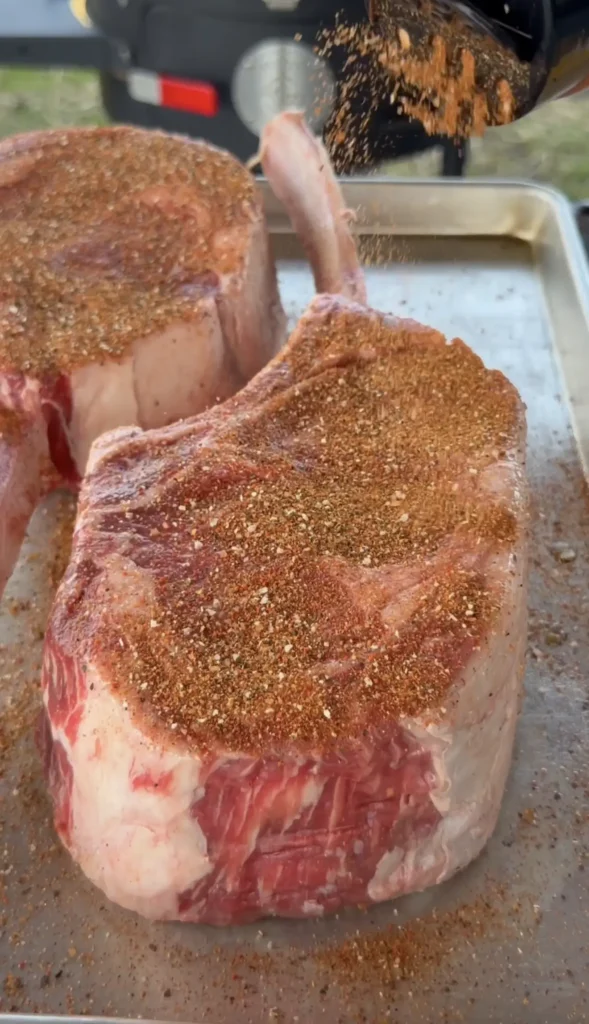
Lightly coat the steaks on all sides with olive oil or beef tallow. Season generously with coarse kosher salt, coarse black pepper, and garlic powder. Make sure you season the edges and the fat cap in addition to the flat surfaces.
Let the seasoned steaks rest at room temperature for 20 to 30 minutes before cooking. This tempering step promotes more even cooking and a better sear.
Step 3: Sear the Tomahawk Steaks Over High Heat
Preheat your grill to 500 to 600 degrees for direct high-heat cooking. If using a Hasty Bake or charcoal grill, bank all coals to one side and sear directly over the hot coals.
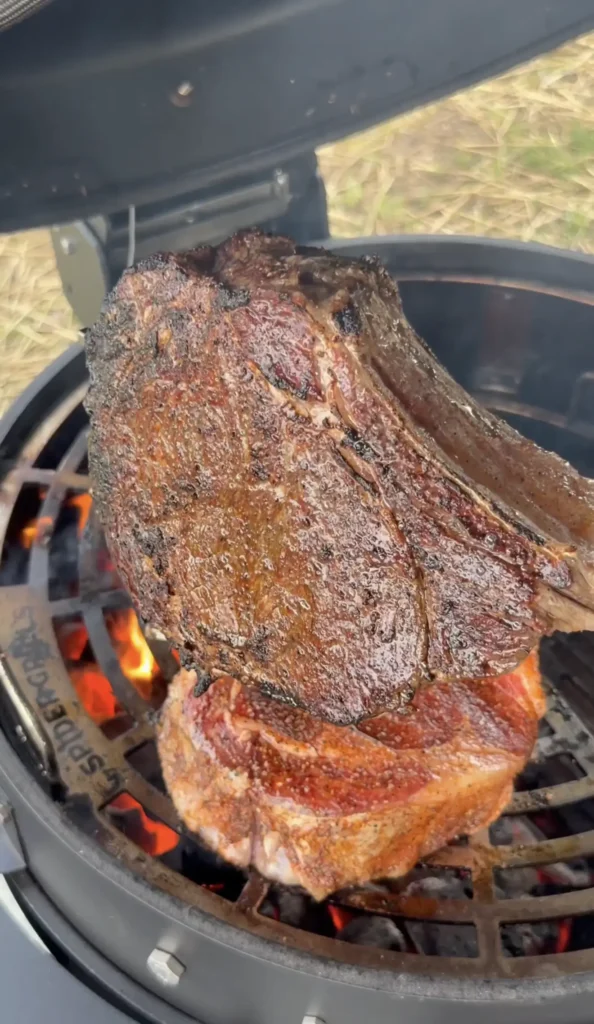
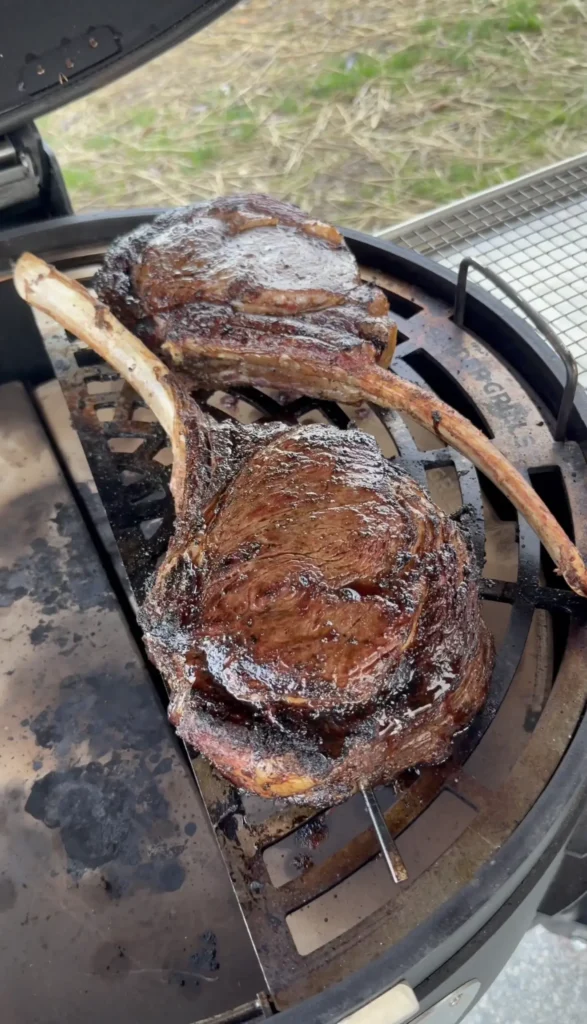
Place the steaks on the grates directly over the heat source. Sear for 2 to 3 minutes per side, rotating once during each side to build an even crust across the entire surface. The goal is a deep, dark brown sear with some charred edges.
Continue searing until the internal temperature reaches approximately 118 degrees. At this point, the exterior should have a thick, caramelized crust with visible char marks.
Step 4: Finish the Steaks With Smoke
Lower the grill temperature to 250 degrees or move the steaks to the indirect (cool) side of the grill. If you want additional smoke flavor, add one fist-sized chunk of oak or hickory wood to the coals before closing the lid.
Close the lid and let the steaks cook on indirect heat until the internal temperature reaches 125 degrees. Depending on thickness and grill temperature, this takes 10 to 20 minutes.
Monitor the internal temperature closely with a probe thermometer. The temperature can climb quickly once the steaks are close to 120 degrees, so check frequently during the last few minutes.
Step 5: Rest and Top With Coal-Smoked Butter
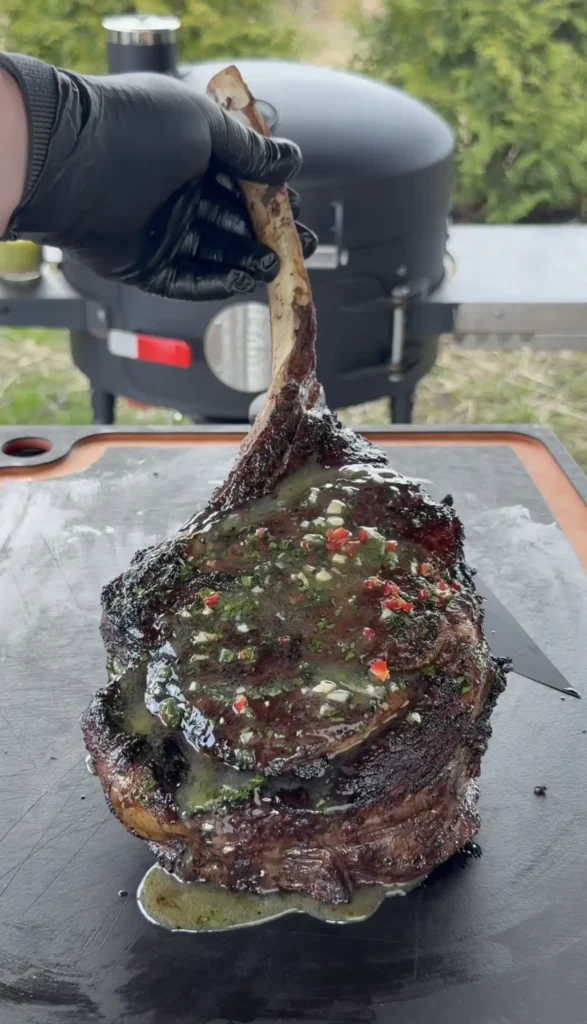
Remove the steaks from the grill and transfer them to a cutting board. Immediately spoon generous amounts of the coal-smoked Fresno honey garlic butter over the top of each steak.
The butter will melt over the hot crust, delivering sweet honey richness, roasted garlic flavor, mild Fresno pepper heat, and real charcoal smoke aroma into every crevice of the seared exterior.
Let the steaks rest for a full 10 minutes before slicing. During this time, the juices redistribute throughout the meat and the carryover cooking brings the internal temperature to the perfect 130 to 132 degrees for medium-rare.
Step 6: Slice and Serve
Slice the meat away from the bone by running a sharp knife along the bone edge. Then slice the ribeye against the grain into half-inch-thick pieces. If the cap section has a different grain direction, separate it and slice independently.
Arrange the sliced steak on a platter with the bone alongside for presentation. Spoon any remaining coal-smoked butter and board juices over the sliced meat. Serve immediately.
Smoked Tomahawk Steaks with Coal-Smoked Fresno Honey Garlic Butter
Equipment
Ingredients
Tomahawk Steaks
Coal-Smoked Fresno Honey Garlic Butter
Instructions
Notes
Frequently Asked Questions
Smoked Tomahawk Steak
Smoked Tomahawk Steak Common Questions
Total cook time is about 35 to 45 minutes, including the sear and the smoking finish. The sear takes about 6 minutes total (2 to 3 minutes per side), and the smoking phase at 250 degrees takes 10 to 20 minutes depending on thickness. Add 10 minutes for resting and you are looking at roughly an hour from grill to plate.
Smoke the steaks at 250 degrees for the finishing phase after searing. Sear first at 500 to 600 degrees to build the crust, then drop the temperature to 250 for a gentle cook to your target internal temperature. Pull at 125 degrees internal for medium-rare.
Absolutely. Preheat your pellet grill to the highest setting (usually 450 to 500 degrees) for the sear, then drop to 250 degrees for the smoke finish. Pellet grills produce consistent, mild smoke at lower temperatures, which works great for this recipe. You can also sear on a cast iron or griddle and transfer to the pellet grill for finishing.
For medium-rare, pull the steak at 125 degrees internal. Carryover cooking during the 10-minute rest will bring it to 130 to 132 degrees, which is the sweet spot for a tomahawk. The heavy marbling needs enough heat to render, so medium-rare gives you the best combination of tenderness, flavor, and juiciness.
Butter Technique and Substitutions
No. Briquettes contain binders, fillers, and sometimes lighter fluid residue that will leave a chemical taste in your butter. Natural lump charcoal burns clean and produces pure wood smoke. This is important because the charcoal goes directly into the butter, so any off-flavors transfer directly. Always use hardwood lump charcoal.
A red jalapeno is the closest substitute. It has similar heat and a comparable bright, fruity flavor. For less heat, use an Anaheim pepper. For more heat, try a serrano. You can also use a standard green jalapeno in a pinch, though you will lose some of the fruity, slightly smoky character that ripe Fresno peppers bring.
Searing a dry, room-temperature steak before smoking it builds a deeper crust because the surface has maximum moisture removal. In a traditional reverse sear, the steak picks up moisture during the low-and-slow phase, which fights against crust formation during the final sear. Both methods work, but searing first gives you a more pronounced steakhouse-style crust.
Oak and hickory are the best choices for beef. Oak provides a clean, medium smoke flavor that complements the rich marbling without overpowering the beef. Hickory adds a bolder, more traditional BBQ smoke flavor. One fist-sized chunk of either is plenty for the short smoking phase in this recipe. Avoid heavier woods like mesquite, which can turn bitter during shorter cooks.
Looking For More Recipes Like This?
If you enjoyed this recipe, check out our full library of grilling recipes.
Upgrade Your Meat Game with Grill Nation x Linz Heritage Angus
We’ve partnered with Linz Heritage Angus to bring you some of the best beef you can get your hands on. Dry-aged to perfection with marbling that makes your mouth water just looking at it.