
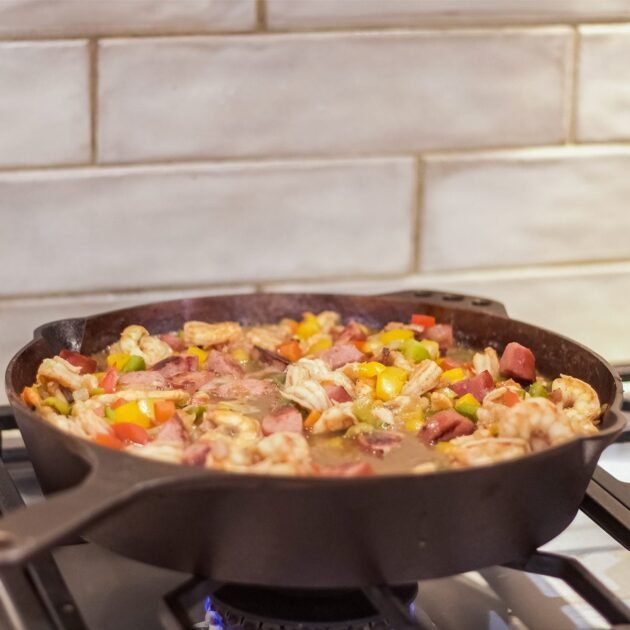

In the world of Southern cooking, cast iron is more than just metal; it is a member of the family. My own journey with ironware started at my father’s side, watching him whip up his signature shrimp and grits in a pan that felt like a piece of history. When I finally treated myself to the Smithey No. cast-iron skillet, I realized I wasn’t just buying cookware. I was investing in a kitchen workhorse that would outlive me.
Smithey Ironware, based in Charleston, South Carolina, has successfully married the charm of vintage, smooth-surfaced pans with modern manufacturing. While many modern cast-iron brands have a pebbled, sandpaper-like texture, Smithey features a signature polished interior that is glass-smooth. This makes it a dream for everything from sliding fried eggs to achieving a crusty, golden sear on a ribeye.
Why This Skillet Stands Out
The No. is a heavy-duty gem, weighing about eight pounds with a -inch diameter. It is designed to be versatile, performing beautifully on gas, induction, electric, and even over an open campfire. Whether you are roasting game, baking a giant skillet cookie, or frying thick-cut bacon, the heat distribution is incredibly even, eliminating the hot spots that plague thinner pans.
What truly makes it special is the “heirloom” factor. Handcrafted in the USA and backed by a lifetime warranty, these pans are designed to be passed down through generations. The more you use it, the better it gets, developing a deep, black patina that becomes naturally nonstick over time.
Ingredients for Success: The Essentials
While the skillet is the star, maintaining that perfect finish requires a few simple tools:
A Smithey No. Cast-Iron Skillet
High-smoke point oil (Grapeseed is my top choice, but canola works too)
A chainmail scrubber for stuck-on bits
A metal spatula for flipping and scraping
Instructions for the Perfect Seasoning
. Pre-heat for Power
Never drop cold food into a cold cast-iron pan. Always start your skillet on low heat and gradually move to medium. If the pan starts to smoke before you have added oil, it is too hot and needs a moment to cool.
. The Cleanup Ritual
After dinner, scrub the skillet with warm water and your chainmail scrubber. Avoid the dishwasher at all costs! Dry it immediately with a towel or on a warm burner to prevent any chance of rust.
. The Stovetop Season
Once dry, apply a very thin layer of oil to the warm pan. Wipe it around until the surface looks matte, then heat it until it just starts to smoke. This “mini-season” after every use keeps the surface slick.
. The Deep Oven Reset
If your pan ever looks dull or grey, rub it entirely in oil and bake it upside down in a -degree oven for one hour. Let it cool inside the oven to lock in that protective layer.
Tips for Better Cooking
While the Smithey is a masterpiece, its smooth surface can sometimes be “shy” about holding seasoning in the beginning compared to rougher pans. The secret is frequency. The more you cook fatty foods like bacon or sautéed vegetables, the faster that nonstick layer builds up. If you are cooking for a family of two to four, the No. is the “Goldilocks” size—large enough for a whole chicken but manageable enough for a Saturday morning pancake session.
Whether you are searing, baking, or frying, this skillet brings a sense of occasion to every meal. It is an investment in your culinary future that pays dividends in flavor and memories. Once you experience the weight and performance of a Smithey, you’ll find yourself leaving it on the stovetop just so you can admire it between meals. Give it a try, and start your own kitchen legacy today.