
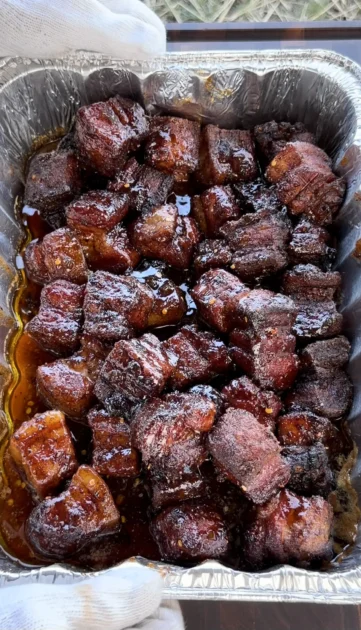

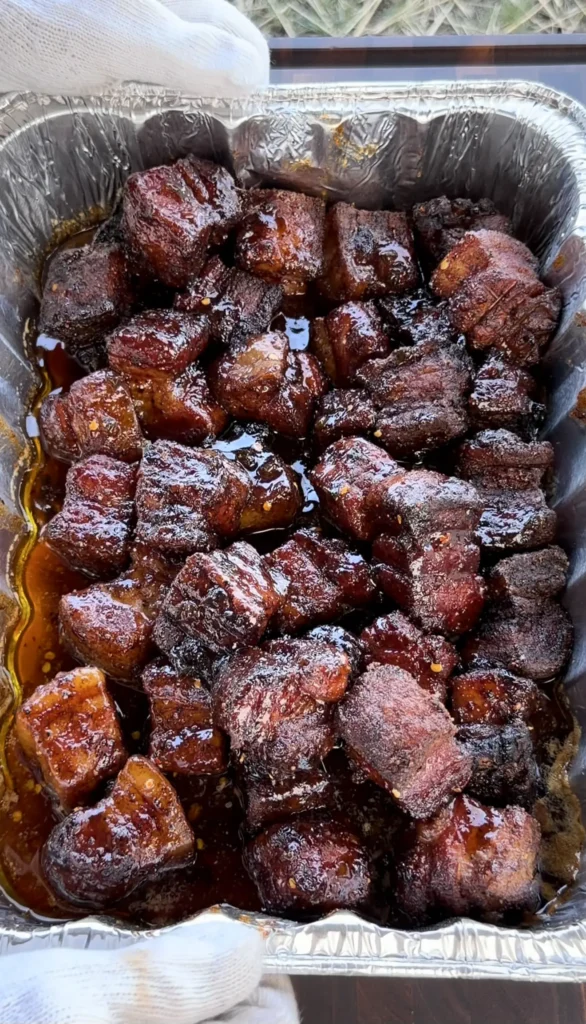
Raspberry jalapeño burnt ends are 1½-inch pork belly cubes seasoned with salt, pepper, garlic powder, and onion powder, smoked at 250°F for 2 to 2½ hours until they reach 165°F to 175°F internal temperature and develop deep mahogany bark, then tossed in homemade raspberry jalapeño BBQ glaze made with raspberry jalapeño jam, ketchup, Worcestershire sauce, apple cider vinegar, and honey. You return them to the smoker at 275°F for 45 to 60 minutes until the sauce caramelizes into sticky coating and internal temperature reaches 195°F to 200°F. The result is crispy edges with buttery-soft interior and perfect sweet-heat balance.
The raspberry jalapeño combination creates superior flavor profile compared to traditional brown sugar burnt ends. The fruit jam adds bright, complex sweetness that cuts through pork belly’s richness. The jalapeño provides subtle heat that builds gradually rather than overwhelming. Apple cider vinegar balances everything with tang. This sweet heat BBQ recipe works on any pellet smoker including Pit Boss, Traeger, Camp Chef, and Recteq. The consistent temperature control of pellet grills makes them ideal for the two-stage cooking process.
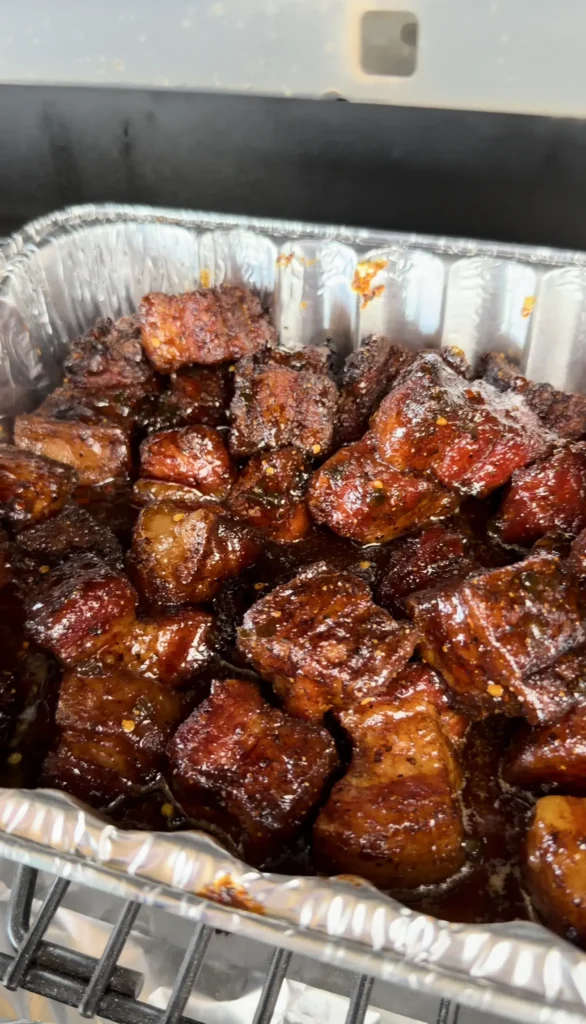
These pork belly burnt ends take about 4 hours total from prep to serving. Active work time is minimal – mostly cubing, seasoning, and making sauce. The smoker does the heavy lifting. Perfect for game day, backyard cookouts, and BBQ competitions. Serves 6 to 8 as appetizer or 4 to 6 as main course. They’re substantial enough for dinner but work beautifully as party food.
Why 1½-Inch Cubes Create Perfect Texture
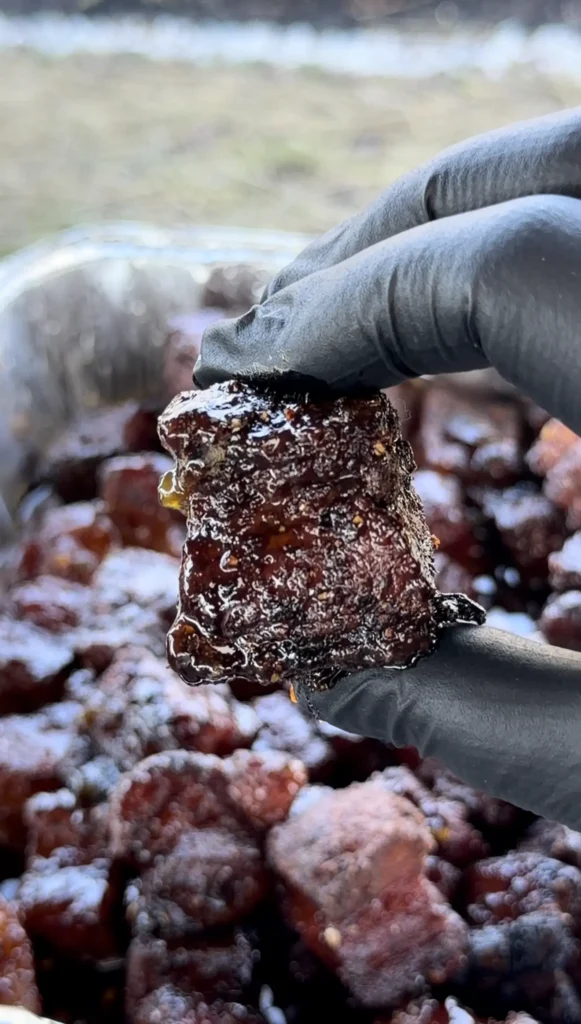
Cutting pork belly into 1½-inch cubes creates ideal surface area to volume ratio for pork belly burnt ends pellet smoker cooking. Cubes larger than 2 inches take too long to cook through. The exterior becomes overly crusty before the interior tenderizes. Smaller cubes (1 inch or less) cook too quickly. They can dry out before developing proper bark.
The 1½-inch size allows adequate smoke penetration. Smoke compounds absorb into the meat during the 2 to 2½ hour initial cook. Larger pieces don’t absorb smoke as effectively. The smoke flavor stays mostly on the surface. With 1½-inch cubes, you taste smoke throughout each bite.
This size also creates optimal crispy edge to tender center ratio. Each cube has six surfaces exposed to heat and smoke. These surfaces develop caramelized bark. The center stays soft and fatty. Biting through crispy exterior into rich center is what burnt ends are all about.
The cubes hold together during the two cooking stages. When you toss them in sauce, properly sized cubes maintain structure. Smaller pieces can fall apart. The 1½-inch cubes are sturdy enough to handle coating and additional cooking without breaking down.
Uniform sizing ensures even cooking. All cubes reach target temperature at roughly the same time. Mixed sizes create uneven doneness. Some pieces overcook while others stay underdone. Use a ruler initially if needed. After a few batches, you’ll eyeball 1½ inches accurately.
Pork belly has natural fat layers running through it. Cutting perpendicular to these layers distributes fat evenly among cubes. Each piece gets marbled fat rather than some being all fat and others all lean. This marbling is essential for moisture and flavor.
How Two-Stage Cooking Prevents Burning
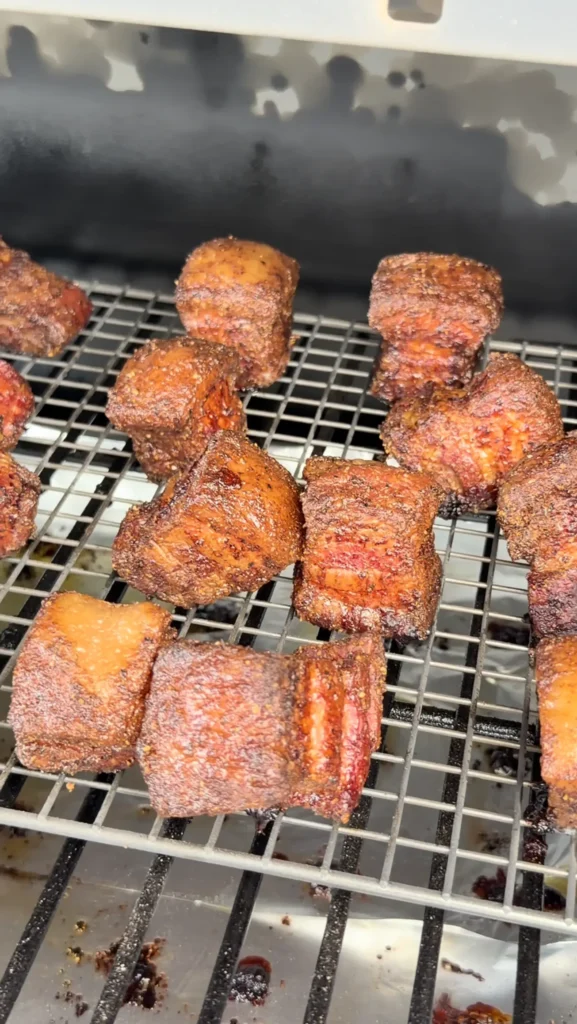
The two-stage cooking method for smoked pork belly cubes prevents sauce from burning while ensuring proper tenderness. Starting at 250°F without sauce allows bark development through the Maillard reaction. Sugar-free seasoning won’t scorch. The pork belly renders fat and absorbs smoke for 2 to 2½ hours.
Adding sauce at the beginning causes problems. BBQ sauce contains sugars that burn at temperatures above 265°F. If you sauce immediately and cook for the full 3+ hours, the sugars carbonize. The burnt ends taste bitter and look black rather than mahogany. The sauce needs to go on after initial smoking.
The first stage also renders significant fat from the pork belly. Pork belly is about 50% fat by weight. Extended low-temperature cooking melts this fat. The rendered fat bastes the meat from inside. It also drips away, concentrating the pork flavor. Starting with sauce would prevent this essential fat rendering.
After the initial smoke, the pork belly cubes are at 165°F to 175°F internal temperature. They have bark but aren’t fully tender yet. This is when you add sauce. The raspberry jalapeño glaze coats the developed bark. It has something to adhere to rather than sliding off raw meat.
Increasing temperature to 275°F for the second stage creates caramelization. The sugars in the jam, honey, and ketchup transform into complex caramel compounds. This happens between 270°F and 290°F. The 275°F target is perfect for controlled caramelization without burning.
What Makes Raspberry Jalapeño Better Than Brown Sugar
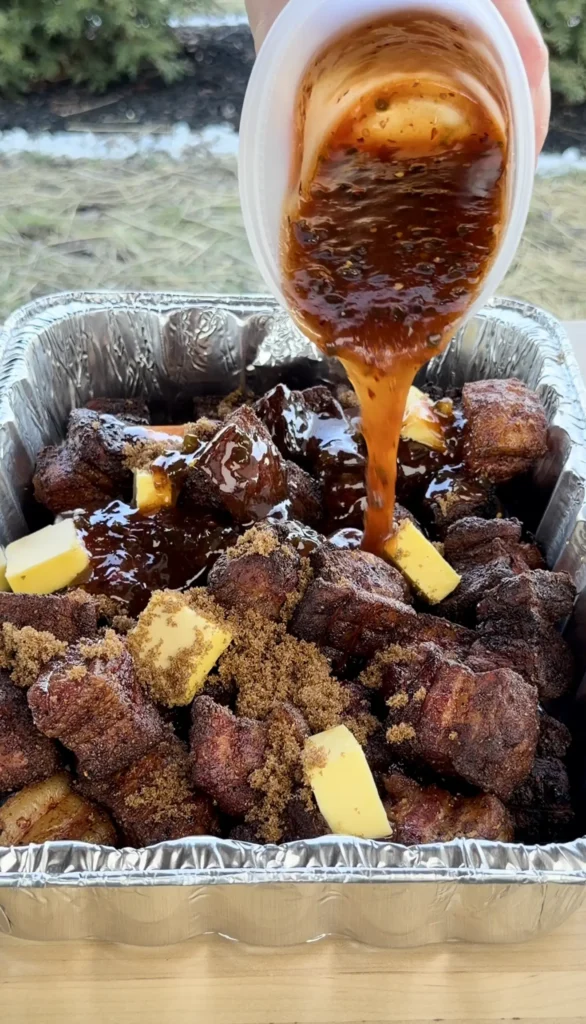
Raspberry jalapeño jam creates more complex raspberry jalapeño BBQ sauce than standard brown sugar. Brown sugar provides one-dimensional sweetness. Raspberry jam offers layered fruit flavors – sweet, slightly tart, and aromatic. The berry notes complement pork’s natural sweetness beautifully.
The acidity in raspberries cuts through pork belly’s richness. Pork belly is extremely fatty. Pure sugar glazes can taste cloying. The fruit acid provides necessary brightness. Your palate doesn’t get overwhelmed by fat and sugar. Each bite stays interesting.
Jalapeño adds complexity that brown sugar lacks. The pepper provides vegetal notes, subtle heat, and aromatic quality. The capsaicin creates warm, pleasant burn that enhances rather than masks other flavors. Most people can handle the moderate heat in this recipe. It’s not tongue-scorching.
The jam also contains pectin which helps the glaze thicken better than brown sugar alone. Pectin is natural thickener from fruit. It creates superior coating consistency. The sauce clings to burnt ends instead of pooling in the pan. Brown sugar melts into thin liquid unless you add cornstarch.
Why Cherry or Apple Wood Pellets Work Best
Cherry wood pellets create ideal smoke profile for pellet smoker pork belly because they provide mild, slightly sweet smoke that enhances rather than overpowers raspberry. Cherry smoke has fruity, almost wine-like character. This complements the berry jam naturally. The flavors harmonize instead of competing.
Apple wood is similarly mild and slightly sweet. It adds subtle fruitiness without strong bark or resin notes. Apple and raspberry are classic pairing in desserts. The same flavor affinity works for savory BBQ applications. The smoke reinforces the fruit notes in the glaze.
Avoid hickory or mesquite for this recipe. These woods produce strong, assertive smoke. Hickory has bacon-like intensity. Mesquite is earthy and aggressive. Both would clash with delicate raspberry flavor. The fruit notes would get lost. You’d taste primarily smoke rather than balanced sweet-heat.
Competition blend pellets work if they’re fruit-wood based. Check the blend composition. If it’s primarily cherry, apple, or pecan with small amounts of oak, it’s fine. Blends heavy on hickory or mesquite are problematic. Read the bag carefully.
Raspberry Jalapeño Burnt Ends
Pork Belly with Sweet Heat BBQ Glaze
Ingredients
For the Pork Belly
For the Raspberry Jalapeño BBQ Glaze
The key to perfect burnt ends is the two-stage cooking process. Smoke at 250°F first to develop bark and render fat without the sugar-based sauce burning. Then add sauce and increase to 275°F for caramelization. This creates crispy, caramelized exterior with buttery-soft interior. Don’t skip the rest after smoking – it allows juices to redistribute and prevents dry burnt ends.
Step-by-Step Instructions
Step 1: Prepare the Pork Belly
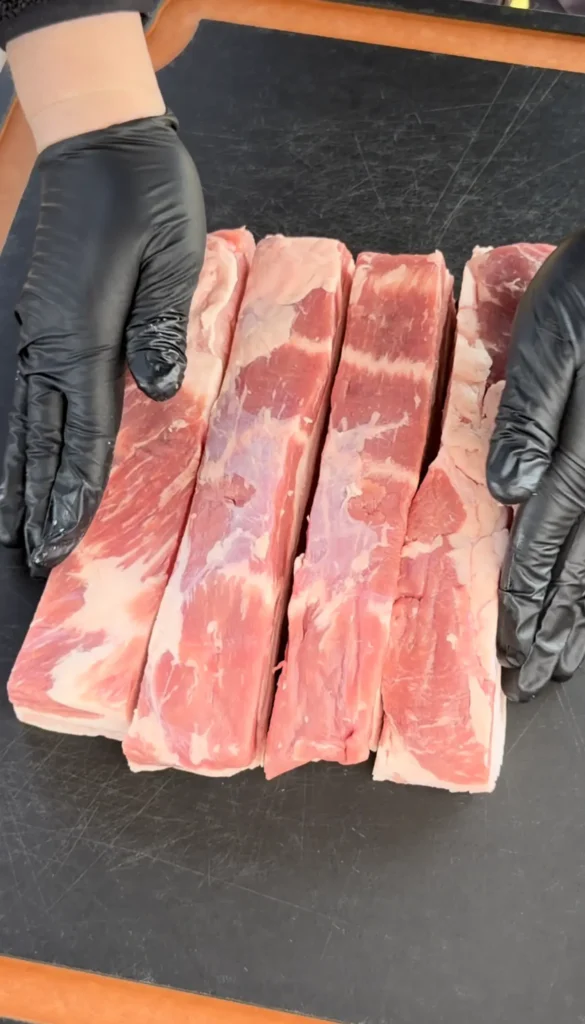
Remove 3 to 4 pounds of pork belly from refrigerator. If skin is still attached, remove it using a sharp knife. Slide the knife between skin and fat layer. The skin is tough and doesn’t render well. Discard it or save for making chicharrones.
Examine the pork belly for any remaining thick fat caps. Pork belly should have marbled fat throughout but some pieces have excessive fat on one side. Trim this down to about ¼ inch thick. You want fat but not huge chunks that won’t render.
Cut the pork belly into 1½-inch cubes. Use a ruler for the first few cuts to establish the size. Try to keep cubes as uniform as possible. Consistency ensures even cooking. You should get approximately 30 to 40 cubes from 3 to 4 pounds.
Place cubes in a large bowl. Season evenly with 1 teaspoon kosher salt, 1 teaspoon black pepper, 1 teaspoon garlic powder, and 1 teaspoon onion powder. Toss to coat all surfaces. The seasoning is intentionally simple to let smoke and sauce flavors shine.
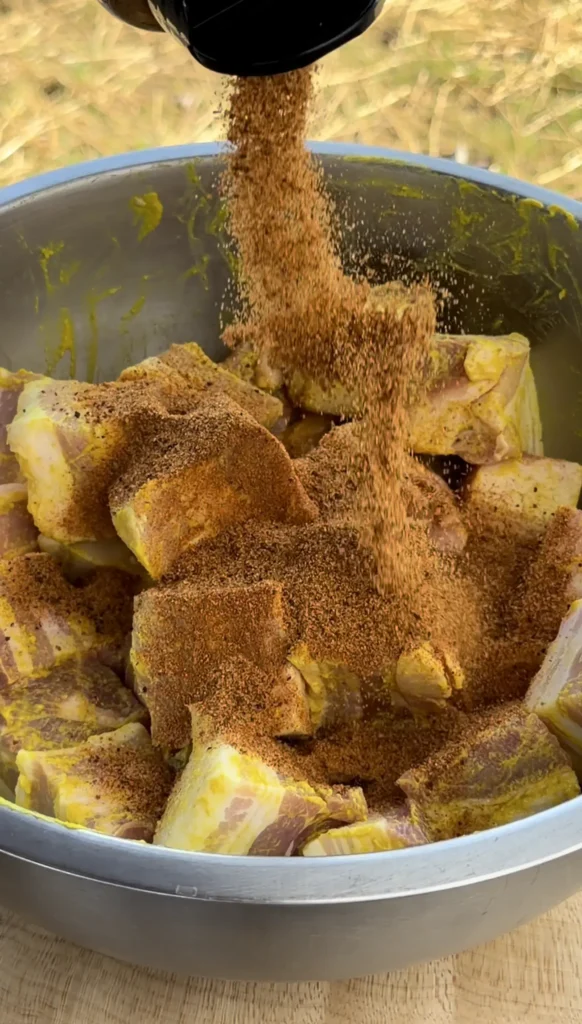
Let seasoned pork belly rest at room temperature for 15 to 20 minutes while you preheat the smoker. This tempering brings the meat closer to cooking temperature. Cold meat straight from fridge takes longer to cook and develops bark unevenly.
Step 2: Preheat the Pellet Smoker
Set your pellet smoker to 250°F. Allow 10 to 15 minutes for preheating. Most pellet smokers have digital controllers that display when target temperature is reached. Wait for this confirmation before adding food.
Fill the pellet hopper with cherry or apple wood pellets. Ensure you have enough for the full cook – at least 2 to 3 pounds. Running out mid-cook creates problems. The auger can jam and temperature drops dramatically.
Clean the grill grates if needed. Built-up residue can cause sticking. Pork belly is fatty so sticking is less concern than with lean meats, but clean grates ensure better bark formation.
Position drip pan beneath where you’ll place the pork belly. The rendered fat will drip throughout cooking. A large disposable aluminum pan works perfectly. Empty it after the first stage if it fills significantly.
Step 3: Smoke the Pork Belly Cubes
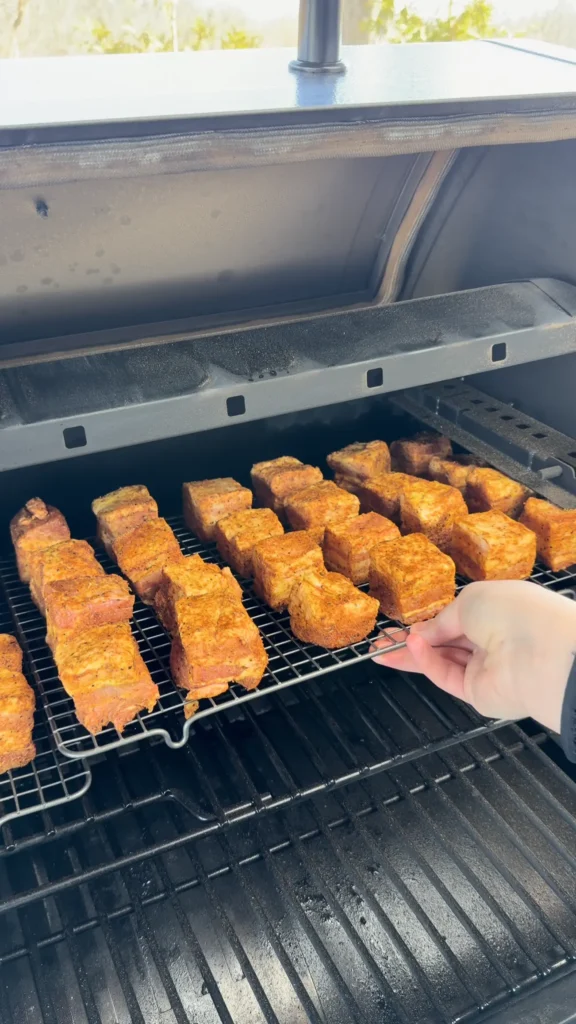
Arrange pork belly cubes directly on the grill grates with space between each piece. Don’t crowd them. Air needs to circulate for proper bark development. Leave at least ½ inch between cubes. You may need to use two grate levels if your smoker allows.
Close the lid and smoke for 2 to 2½ hours without opening. Every time you open the lid, temperature drops and smoke escapes. Resist the urge to check constantly. Let the smoker do its job.
The pork belly is ready for saucing when it reaches 165°F to 175°F internal temperature. Insert an instant-read thermometer into the center of several cubes. They should also have developed deep mahogany color and visible bark formation.
The cubes will have shrunk noticeably as fat renders. This is normal and expected. They should look darker and slightly crusty on all exposed surfaces. The meat should feel firm to touch but not hard.
Step 4: Make the Raspberry Jalapeño Glaze
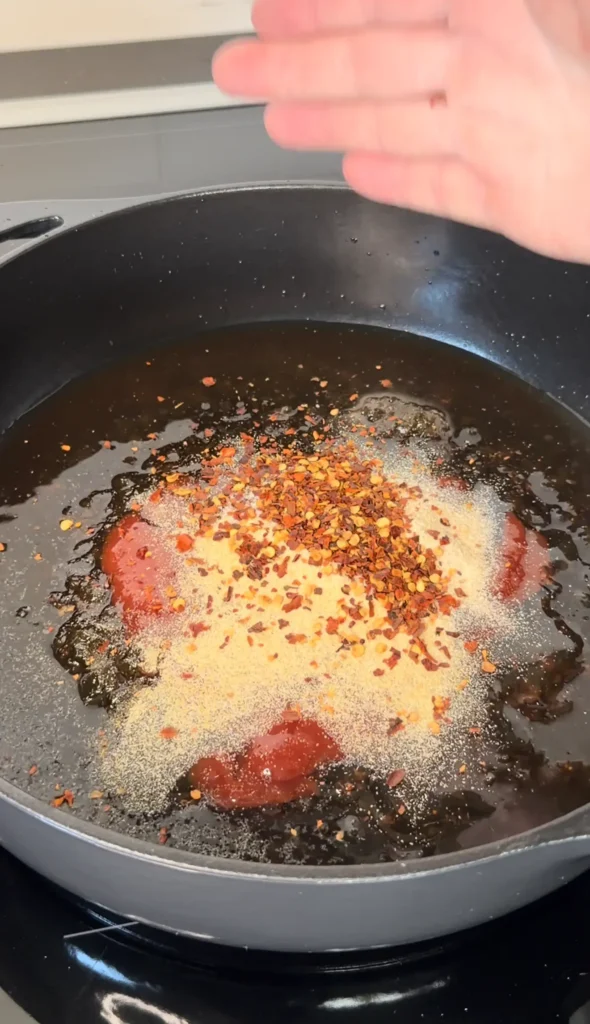
While the pork belly smokes, make the sauce. In a medium saucepan over medium heat, combine ½ cup raspberry jalapeño jam, ¼ cup ketchup, 1 tablespoon Worcestershire sauce, 1 tablespoon apple cider vinegar, 1 to 2 tablespoons honey, ½ teaspoon garlic powder, ½ teaspoon onion powder, and ¼ teaspoon red pepper flakes.
Stir constantly as the mixture heats. The jam will melt and combine with other ingredients. Bring to gentle simmer – small bubbles breaking the surface. Don’t let it boil vigorously.
Simmer for 5 to 7 minutes, stirring frequently. The sauce will thicken slightly and flavors will meld. It should coat the back of a spoon when done. If too thick, thin with splash of apple cider vinegar. If too thin, simmer longer.
Taste and adjust. Add more honey for sweetness, more vinegar for tang, or more red pepper flakes for heat. Season with salt and black pepper. The sauce should taste balanced – sweet, tangy, slightly spicy, with strong raspberry flavor.
Remove from heat and set aside. The sauce will thicken more as it cools. This is fine. It will loosen again when you toss it with hot pork belly.
Step 5: Glaze and Caramelize
Transfer smoked pork belly cubes to a disposable aluminum foil pan. They should fit in single layer with some overlap acceptable. Pour all of the raspberry jalapeño glaze over the cubes.
Using tongs or a large spoon, toss the cubes until completely coated with sauce. Every surface should glisten with glaze. Be gentle to avoid breaking apart the tender cubes, but ensure thorough coating.
Increase smoker temperature to 275°F. Give it 5 minutes to come up to temperature. Return the foil pan of sauced burnt ends to the smoker.
Cook uncovered for 45 to 60 minutes. The exact time depends on how thick you want the glaze. At 45 minutes, check consistency. The sauce should be bubbling and starting to caramelize. The edges should look sticky and slightly crusty.
Check internal temperature. You’re targeting 195°F to 200°F for optimal tenderness. The cubes should probe tender – meaning a thermometer or toothpick slides in and out with little resistance.
If sauce appears too thin at 45 minutes, continue cooking. Check every 10 minutes. If sauce is thickening too much or starting to burn around pan edges, remove immediately. Better slightly under-caramelized than burnt.
Step 6: Rest and Serve
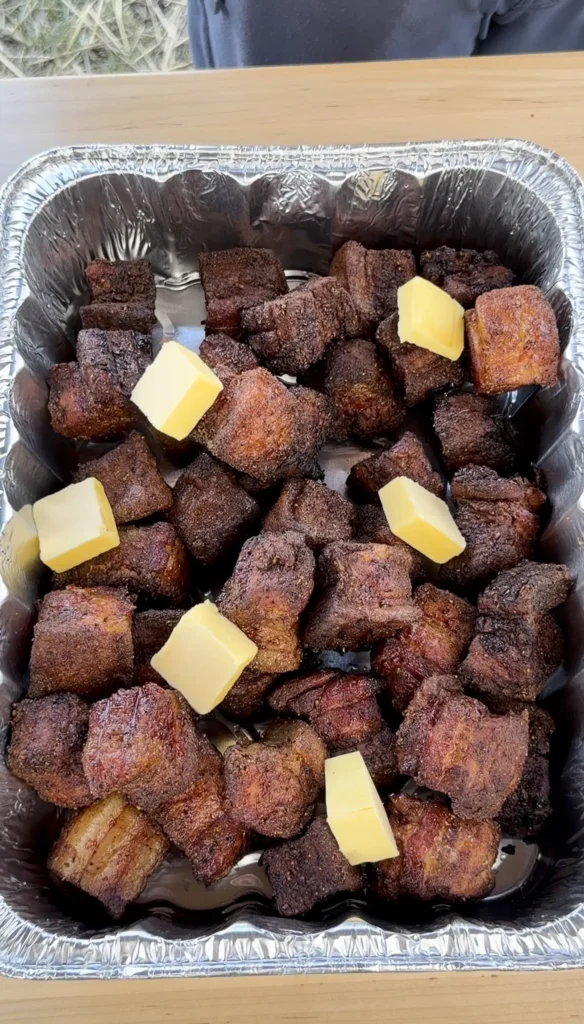
Remove the pan from smoker when burnt ends reach target temperature and sauce consistency. Let rest for 10 to 15 minutes. This isn’t critical for food safety since pork is already well-cooked. The rest allows the glaze to set slightly and juices to redistribute.
Optional: brush with small amount of fresh glaze for extra shine. Heat a couple tablespoons of reserved sauce and brush over the tops. This creates glossy, photogenic finish.
Serve the raspberry jalapeño burnt ends directly from the foil pan for casual presentation. Or transfer to serving platter. Provide toothpicks for easy eating. Garnish with chopped fresh parsley or green onions if desired.
These are best served warm rather than hot. The texture is optimal around 140°F to 150°F. The glaze is sticky but not molten. The pork belly is tender but holds together.
Raspberry Jalapeño Pork Belly Burnt Ends
Equipment
Ingredients
For the Pork Belly
For the Raspberry Jalapeño BBQ Glaze
Instructions
Notes
Frequently Asked Questions
What Pellets Are Best for Pork Belly Burnt Ends?
Cherry and apple wood pellets are best for pork belly burnt ends with raspberry glaze. These mild, fruity woods complement the berry flavors naturally. Cherry provides slightly sweet smoke with wine-like notes. Apple offers subtle fruitiness. Both enhance rather than overpower the raspberry jalapeño sauce.
Avoid hickory and mesquite for this recipe. Hickory produces strong, bacon-like smoke that clashes with delicate raspberry. Mesquite is earthy and aggressive. The fruit notes get lost under heavy smoke. You’d taste primarily smoke rather than balanced sweet-heat.
Competition blend pellets work if they’re fruit-wood based. Check the bag composition. Blends primarily containing cherry, apple, or pecan are fine. Blends heavy on hickory or mesquite create flavor conflicts.
Pecan is acceptable middle ground if you don’t have cherry or apple. The nutty smoke doesn’t clash with raspberry though it’s less harmonious. Premium pellet brands like Bear Mountain, Lumber Jack, or CookinPellets burn cleaner and provide consistent results.
Can You Make These Burnt Ends Ahead of Time?
You can smoke the pork belly cubes completely through the first stage, then refrigerate for up to 2 days before finishing. This actually works well for party prep. Smoke at 250°F until they reach 165°F to 175°F and develop bark. Cool completely and refrigerate in airtight container.
When ready to serve, reheat the smoked cubes on the smoker or in a 300°F oven for 15 to 20 minutes. Then proceed with the glazing and caramelization stage. Add sauce, increase temperature to 275°F, and cook for 45 to 60 minutes as directed.
The texture remains excellent with this make-ahead method. The bark stays intact. The reheating doesn’t dry out the pork belly because of its high fat content. Make the glaze fresh on serving day for best flavor.
Don’t make them completely finished and try to reheat. The caramelized sauce doesn’t reheat well. It can separate or burn. The make-ahead approach works best when you stop after the first smoke stage.
Can You Use Store-Bought Raspberry Jalapeño Jam?
Store-bought raspberry jalapeño jam works excellently. Look for brands with real fruit as the first ingredient. Avoid jams where high-fructose corn syrup is the primary sweetener. Quality matters but homemade isn’t necessary.
Bonne Maman, Stonewall Kitchen, and local farmers market jams typically have good ingredient lists. Read labels carefully. The jam should contain raspberries, sugar, jalapeños, and pectin. Avoid artificial flavors or colors.
If you can’t find raspberry jalapeño jam specifically, you can combine regular raspberry jam with fresh diced jalapeños. Use ½ cup raspberry jam and add 1 to 2 tablespoons finely diced fresh jalapeño (seeds removed for mild heat, kept for spicy). This approximates commercial raspberry jalapeño jam.
Other pepper jams work as alternatives. Blackberry jalapeño, strawberry habanero, or peach ghost pepper all create interesting variations. Adjust heat level based on your pepper tolerance and the specific jam’s intensity.
What If the Sauce Gets Too Thick During Caramelizing?
Thin the sauce immediately with apple cider vinegar or water if it becomes too thick during the caramelization phase. Add 1 to 2 tablespoons at a time, stirring to incorporate. The sauce should coat the burnt ends in sticky glaze, not create hard candy coating.
Watch the sauce carefully during the 45 to 60 minute caramelization. Check at 45 minutes. If it’s bubbling thickly and coating the spoon heavily, it’s approaching done. If it’s becoming paste-like or starting to scorch around pan edges, remove immediately.
Temperature affects caramelization speed. If your smoker runs hot and reaches 285°F to 290°F instead of 275°F, the sauce thickens faster. Monitor closely and reduce time if needed. Better to pull slightly early than burn the sauce.
You can also thin with additional raspberry jam. This adds more flavor while adjusting consistency. Heat 2 tablespoons jam with 1 tablespoon water, then drizzle over the burnt ends and toss. This refreshes the glaze without diluting flavor.
How Do You Know When Burnt Ends Are Done?
Burnt ends are done when they reach 195°F to 200°F internal temperature and probe tender. Insert an instant-read thermometer or toothpick into several cubes. It should slide in and out with minimal resistance. This “probe tender” test is critical. Temperature alone doesn’t guarantee perfect texture.
Visual cues include deeply caramelized, sticky glaze coating all surfaces. The sauce should look thick and glossy, not runny. The edges should appear slightly crusty with concentrated color. The pork belly cubes will have shrunk noticeably from their original size.
The cubes should jiggle slightly when you shake the pan but hold their shape. Overdone burnt ends fall apart into shreds. Underdone ones feel firm and resist the thermometer. The sweet spot is tender but cohesive.
Taste testing is valuable if you can safely sample. The pork should be melt-in-your-mouth tender. The fat should be rendered and soft, not chewy. The glaze should taste balanced – sweet, tangy, smoky, with pleasant heat. If anything tastes off, adjust sauce or cooking time.
Can You Make These Without a Pellet Smoker?
Charcoal or gas grills with indirect heat setup work for burnt ends. Maintain 250°F for the initial smoke using a two-zone configuration. For charcoal, bank coals on one side. For gas, light burners on one side only. Place pork belly on the cool side.
Add wood chunks or chips for smoke flavor. Soak wood chips for 30 minutes before using. Wrap in foil pouch with holes poked in top. Place directly on coals or over lit burners. Cherry or apple wood chunks work best.
Temperature control is more challenging on non-pellet grills. Monitor constantly with grill thermometer. Adjust vents (charcoal) or burner settings (gas) to maintain 250°F. You may need to add more charcoal during long cook.
Oven method works as last resort though you lose smoke flavor. Add 1 teaspoon liquid smoke to the seasoning. Bake at 250°F for 2 to 2½ hours on wire rack over baking sheet. Add sauce and increase to 275°F for caramelization. Results are good but not authentic smoked flavor.
What’s the Best Way to Cut Pork Belly Into Cubes?
Use a sharp chef’s knife or long slicing knife to cut pork belly into cubes. Start by removing the skin if attached. Then trim excessive fat caps down to ¼ inch. The pork belly should be cold from refrigerator – this makes cutting easier.
Cut the pork belly into 1½-inch wide strips first. Measure the first cut with a ruler to establish size. Then rotate 90 degrees and cut perpendicular strips creating 1½-inch squares. Finally, if the belly is thick, cut horizontally to create cubes rather than tall rectangles.
Try to cut perpendicular to the fat layers when possible. This distributes fat evenly among cubes. Each piece should have some marbled fat running through it. Avoid creating some cubes that are all lean and others that are all fat.
Uniformity matters more than perfection. Cubes don’t need to be exactly 1½ inches but they should all be similar size. This ensures even cooking. Mixed sizes result in some pieces being overcooked while others are undercooked.
How Spicy Are These Burnt Ends?
These burnt ends have moderate, manageable heat. The jalapeño in the jam provides subtle warmth rather than intense burn. Most people find the heat pleasant and balanced. The sweetness from raspberry and honey tempers the jalapeño’s spiciness.
The ¼ teaspoon red pepper flakes adds background heat. You can reduce this to ⅛ teaspoon for milder version or increase to ½ teaspoon for more kick. The red pepper flakes distribute heat evenly throughout the sauce.
Heat level depends on your raspberry jalapeño jam brand. Some are mild with barely noticeable pepper. Others pack significant punch. Taste the jam before using. If it’s very spicy, reduce or omit the red pepper flakes.
For truly mild burnt ends, use regular raspberry jam and add just 1 tablespoon finely diced jalapeño (seeds removed). For spicy version, use ghost pepper or habanero jam instead. You can also serve hot sauce on the side for heat lovers to add as desired.
Can You Freeze Pork Belly Burnt Ends?
Freeze burnt ends without sauce for up to 2 months for best results. Complete the first smoke stage at 250°F until they reach 165°F to 175°F. Cool completely. Package in freezer bags or airtight containers. Remove as much air as possible to prevent freezer burn.
To serve from frozen, thaw overnight in refrigerator. Reheat on smoker or in oven at 300°F for 20 minutes. Then proceed with glazing and caramelization as directed. The texture remains good with this approach.
Freezing fully finished burnt ends with sauce works but quality suffers. The caramelized sauce can separate or become grainy when frozen and thawed. The texture isn’t as good as fresh. If you must freeze finished burnt ends, reheat gently and consider adding fresh glaze.
Vacuum sealing provides best freezer storage. It prevents freezer burn and extends storage time to 3 months. Standard freezer bags work for shorter storage. Label clearly with date and contents.
What Should You Serve with Pork Belly Burnt Ends?
Creamy coleslaw provides cooling contrast to rich, sweet-heat burnt ends. The acidity and crunch balance the fatty pork belly. Vinegar-based slaw works better than mayo-based for this application. The tang cuts through richness effectively.
Smoked mac and cheese complements burnt ends for ultimate BBQ comfort food pairing. The creamy cheese sauce and tender pasta balance the crispy, caramelized exterior of burnt ends. Both are indulgent but work together.
Jalapeño cornbread reinforces the sweet-heat theme. The corn’s natural sweetness and jalapeño’s heat echo the burnt ends’ flavor profile. Serve warm with butter for best results.
Other excellent sides include grilled street corn with lime and cotija, pickled red onions for acidity, baked beans for traditional BBQ accompaniment, potato salad, and dinner rolls for soaking up sauce. Provide plenty of napkins – burnt ends are deliciously messy.
If you’re looking for more recipes like this recipe, click the link!
Explore By Category
🥩 Beef Recipes
🐖 Pork Recipes
🍗 Chicken Recipes
🦃 Turkey Recipes
🦞 Seafood Recipes
🔥 Appetizers
Common Items Used in These Recipes
Hasty Bake Charcoal Grill and Smoker
Knitted Gloves
Food Processor
Cast Iron Skillet
Meater +
Upgrade Your Meat Game with Grill Nation x Linz Heritage Angus
If you really want to take your grilling and cooking to the next level, you need to check out our collaboration with Linz Heritage Angus. We’ve partnered with them to bring you some of the best beef you can get your hands on. Linz Heritage Angus isn’t your typical grocery store meat. These guys are the real deal – they raise their cattle the right way, and you can taste the difference in every bite. We’re talking about beef that’s been dry-aged to perfection, with marbling that makes your mouth water just looking at it.
Premium Ribeye Steaks
Perfect for special occasions
Dry-Aged Beef Selection
Take your grilling to the next level
Ground Beef & Burger Blends
The foundation of great BBQ