

🚨 INJECTION SCANDAL: Why Dry Rubs Are For Amateurs! 🚨
Forget everything you thought you knew about smoking prime rib. The biggest secret in the professional BBQ world is out, and it involves a highly aggressive, highly effective method: the flavor injection. Insiders confirm that dry rubs simply can’t penetrate the thick muscle sections of a massive bone-in prime rib, leaving the center bland and dry.
The only way to guarantee a consistently juicy, flavorful slice from edge to edge is through an internal liquid delivery system. We’re talking about a bone-in beef roast that is savagely injected with a garlic herb marinade and then savagely seasoned with bold Cajun spices. This technique is so effective, it’s quickly becoming the only acceptable way to cook this expensive cut for the holidays.
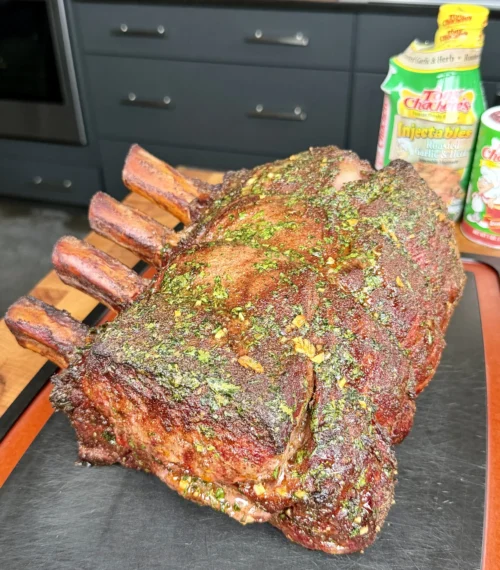
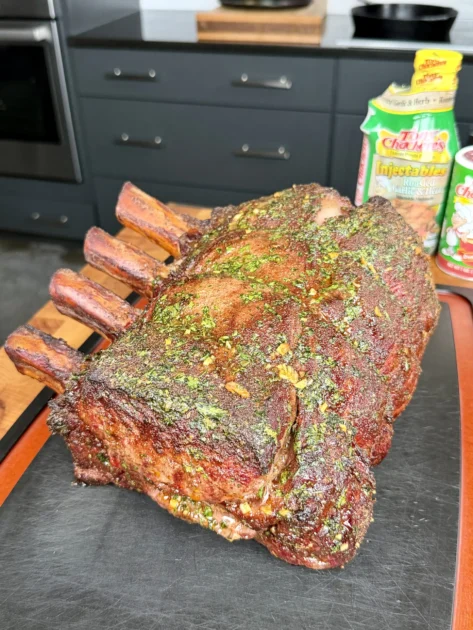
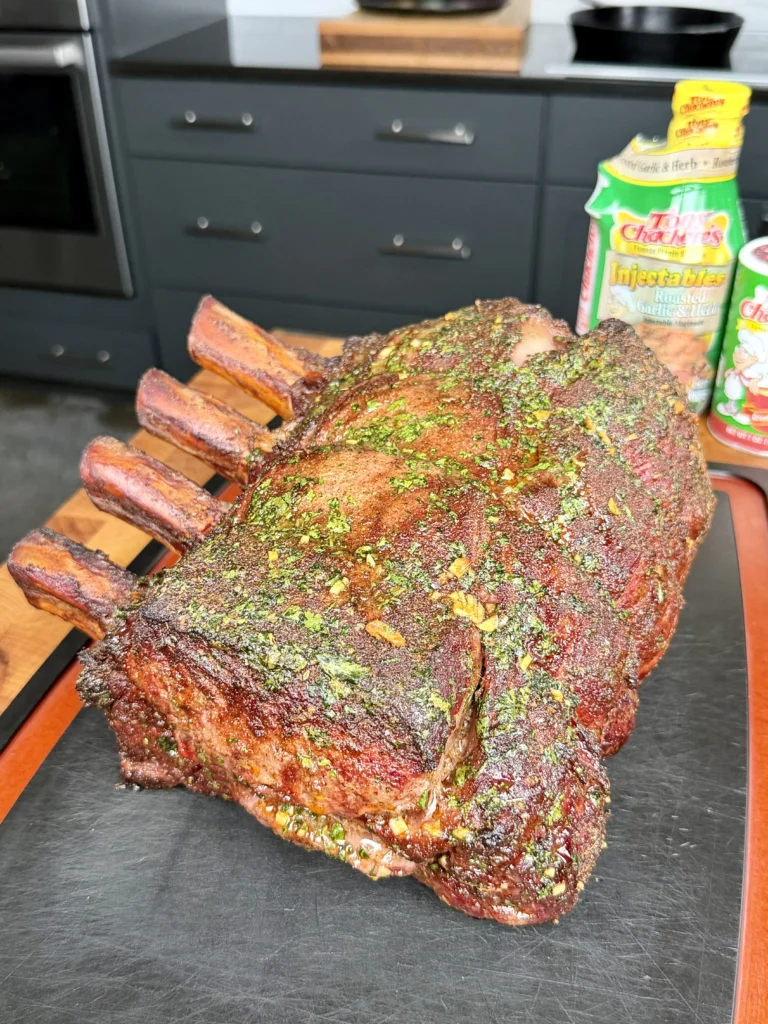
The entire process takes about five hours, resulting in a tender interior, Louisiana-inspired heat, and a stunning mahogany crust achieved with a Cajun honey butter baste. The results are undeniable, serving 8 to 12 people with a dramatic presentation that will make your boring neighbors weep with envy. This is not just cooking; it’s a culinary power play.
💉 WHY INJECTION IS THE ONLY WAY TO SAVE YOUR ROAST 💉

The argument is simple and devastating: a dry rub sits on the surface, forming a great crust but penetrating less than a quarter inch deep. The center of a thick, massive prime rib remains completely bland. Injection solves this problem by delivering flavor and moisture directly into the meat’s interior—a culinary crime that yields the perfect result.
The preferred injectable marinade—Tony’s Roasted Garlic Herb Injectable Marinade—contains liquid butter, garlic, and herbs. When you use a meat injector needle deep into the roast, the butter coats the muscle fibers from the inside out. As the roast smokes, this internal moisture acts as an insurance policy, preventing dryness at all costs.
The technique requires pushing the needle deep into the roast in a grid pattern, spacing injection sites every one to two inches. This ensures complete coverage of the thick muscle sections. Compare that to a dry rub that only hits the surface; the difference is so dramatic that experts are calling dry-rub-only prime rib a total waste of expensive beef.
The added liquid also aids in heat conduction, promoting even cooking from edge to center. This is the secret to avoiding the dreaded “gray overcooked band” around a rare center. Injection guarantees edge-to-edge pink perfection.
🌶️ TONY’S MORE SPICE: The Cajun Blend That Brings The Heat 🌶️

For the exterior crust, standard seasoning simply won’t cut it. The Louisiana-inspired flavor profile comes from using a bold Creole spice blend like Tony’s More Spice. Traditional rubs are boring—just salt, pepper, and garlic. Tony’s throws down paprika, cayenne, and a complex Creole ratio that creates a depth of flavor and a moderate heat that wakes up your palate.
This heat is crucial. The cayenne cuts through the rich, almost overwhelming fattiness of the prime rib. Without that spice, the roast tastes heavy. Tony’s lightens the load and adds a thrilling layer of excitement that complements the deep, smoky flavor. The paprika, when mixed with the honey butter baste, caramelizes into a stunning mahogany bark that looks utterly dramatic on a platter.
We are demanding that cooks stop using bland salt and pepper. Your prime rib should not be pale! It should be dark, crusty, and complex. If you can’t find Tony’s, you need to find a spicy substitute like Slap Ya Mama or Zatarain’s that proves you’re serious about flavor. Anything less is a culinary betrayal of the beef.
🌡️ SMOKING SECRETS: The Temperature That Guarantees Tenderness 🌡️
The prime rib must be smoked at 250 degrees Fahrenheit—a slight, intentional deviation from the traditional 225 degrees used for less aggressive recipes. This extra 25 degrees is the key to rendering the thick fat cap faster and quickly building the necessary crust without dramatically overshooting the internal temperature.
At 250 degrees, the Cajun seasoning crusts up beautifully, and the honey butter baste caramelizes perfectly, without turning bitter. Higher temperatures (275 to 300 degrees) are tempting for speed, but they create those hideous thick gray bands of overcooked meat around the edges, sacrificing the prized edge-to-edge pink interior. You lose the smoke flavor and ruin the expensive cut.
The rule is simple: trust your internal thermometer, not the clock. Pull the roast when the thermometer hits 115-118 degrees Fahrenheit in the thickest part, away from the bone. For wood, stick to strong, savory flavors like hickory, oak, or pecan. Avoid mesquite—it’s too strong and will bully the delicate Cajun and garlic flavors.
💥 THE REVERSE SEAR POWER PLAY: Caramelizing The Cajun Crust 💥
The final, crucial step is the reverse sear, and it’s where the Cajun honey butter baste delivers its final, spectacular performance. You smoke low and slow until 115-118 degrees, then you pull the roast, crank the heat to 500 degrees Fahrenheit, and sear it for just seven to ten minutes.
The high heat turns the sugars in the honey into a rapid, aggressive caramelization, while the paprika in Tony’s quickly forms that dramatic mahogany bark. The fat cap renders further and crisps up into a desirable, crunchy exterior. But a word of warning: the honey content means the crust can go from perfect to charred in less than two minutes. You must watch it closely.
The internal temperature will climb five to ten degrees during this intense sear and subsequent rest, landing you perfectly in the medium-rare sweet spot (125-130 degrees). Immediately after searing, you must let the roast rest for 25 to 35 minutes, tented loosely with foil. Skipping this step is a culinary sin; the meat will bleed out onto the cutting board, ruining the juiciness that the injection worked so hard to achieve.
📝 THE SECRET RECIPE: Injected, Seasoned, and Sliced 📝
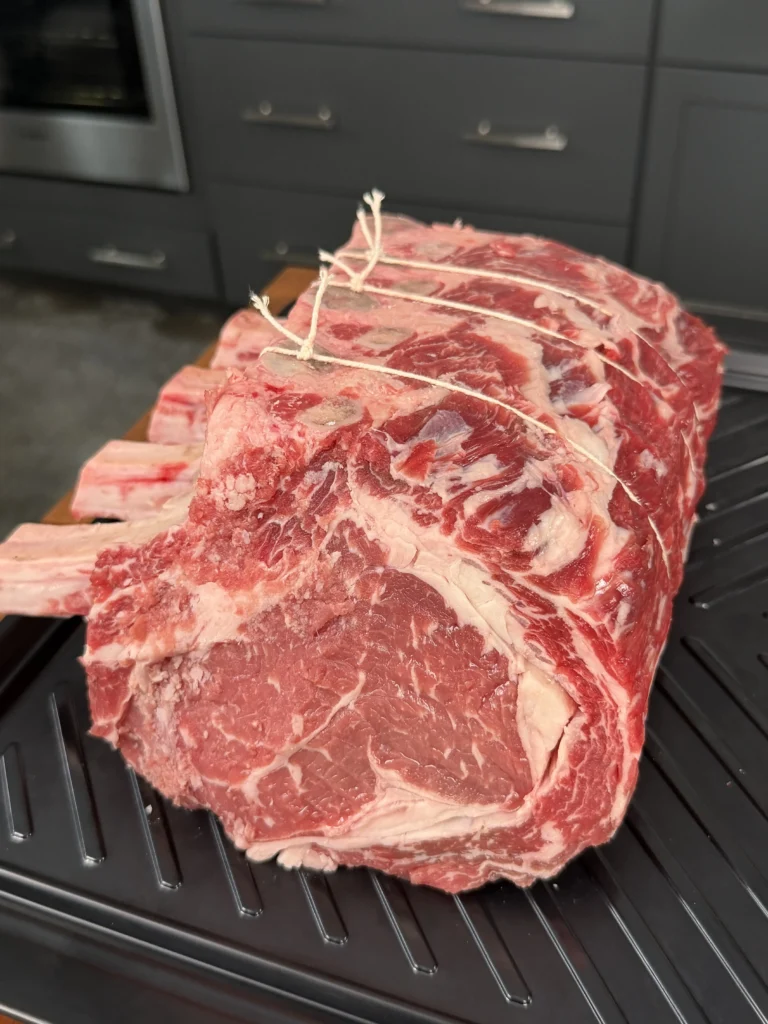
This aggressive, high-stakes prime rib method requires patience, a meat injector, and zero fear. Step 1: Injecting. Load the garlic herb marinade and aggressively inject in a grid pattern across the entire roast, hitting multiple muscle layers. Keep injecting until marinade leaks out—that’s how you know you’ve guaranteed internal flavor.
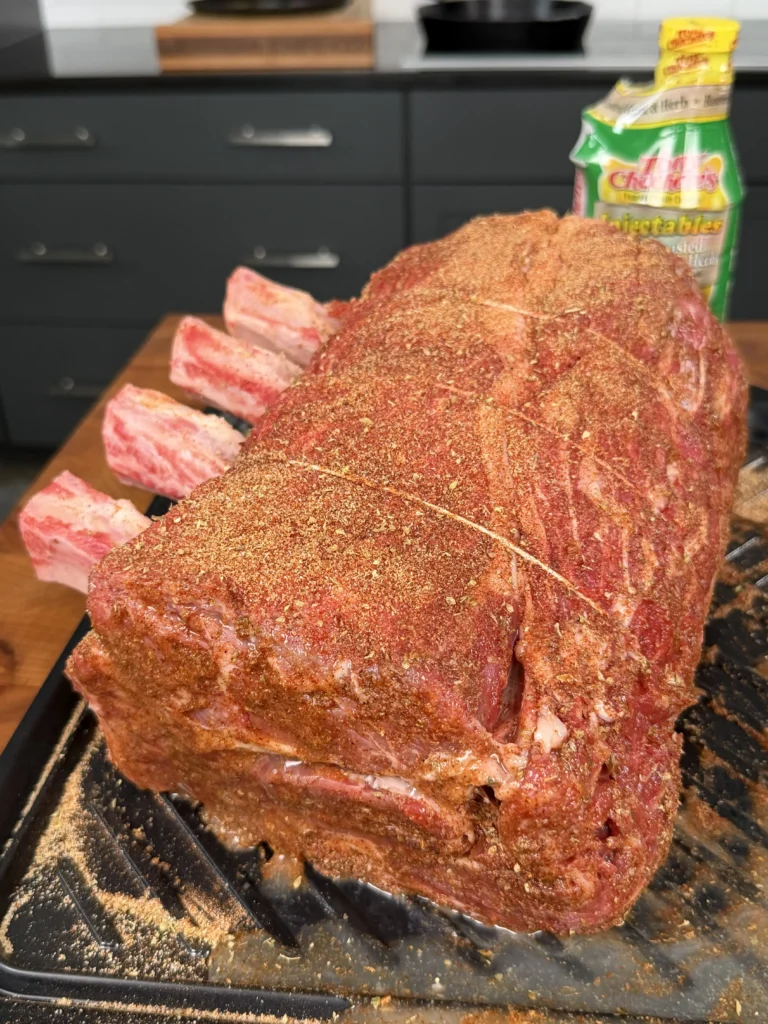
Step 2: The Rub. Coat the entire roast with a thin binder of oil or butter, then hit it aggressively with the Cajun dry rub (Tony’s More Spice, salt, pepper, smoked paprika, etc.). Press it in hard. This should look thick and crusty. For best results, dry-brine the seasoned roast in the fridge, uncovered, for up to 12 hours.
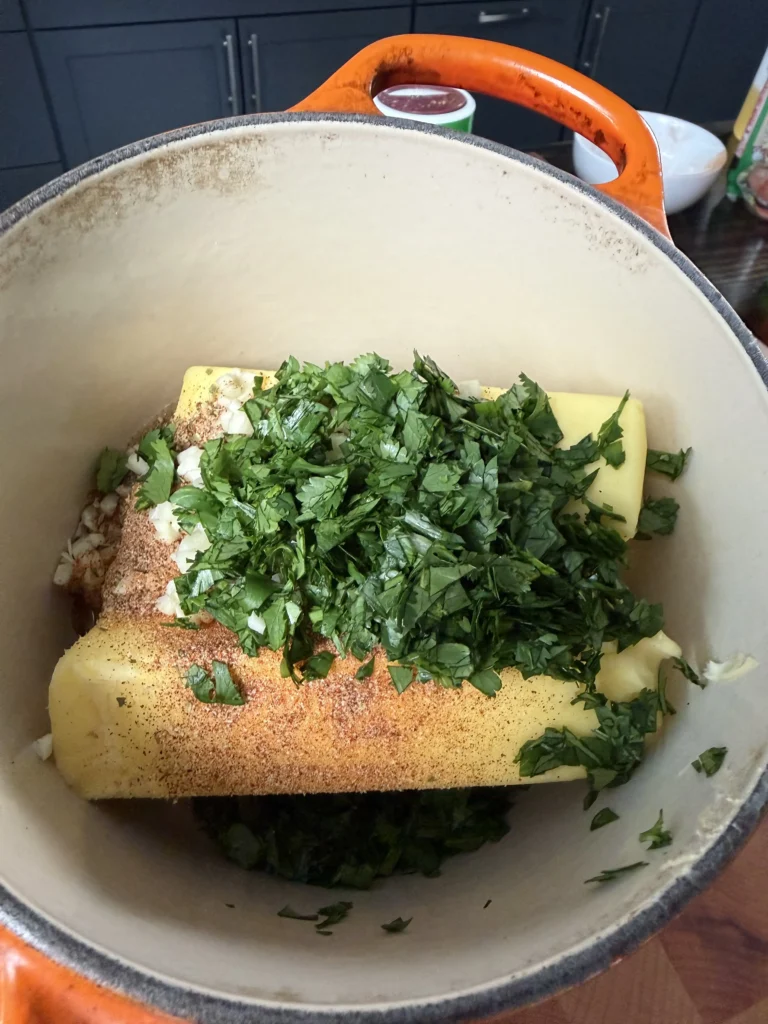
Step 5: The Baste. After smoking for 45 minutes, brush the prime rib with the Cajun honey butter baste. Repeat this aggressive basting every 45 minutes until the internal temperature hits 115-118 degrees. This builds the mahogany bark and keeps the exterior from drying out.
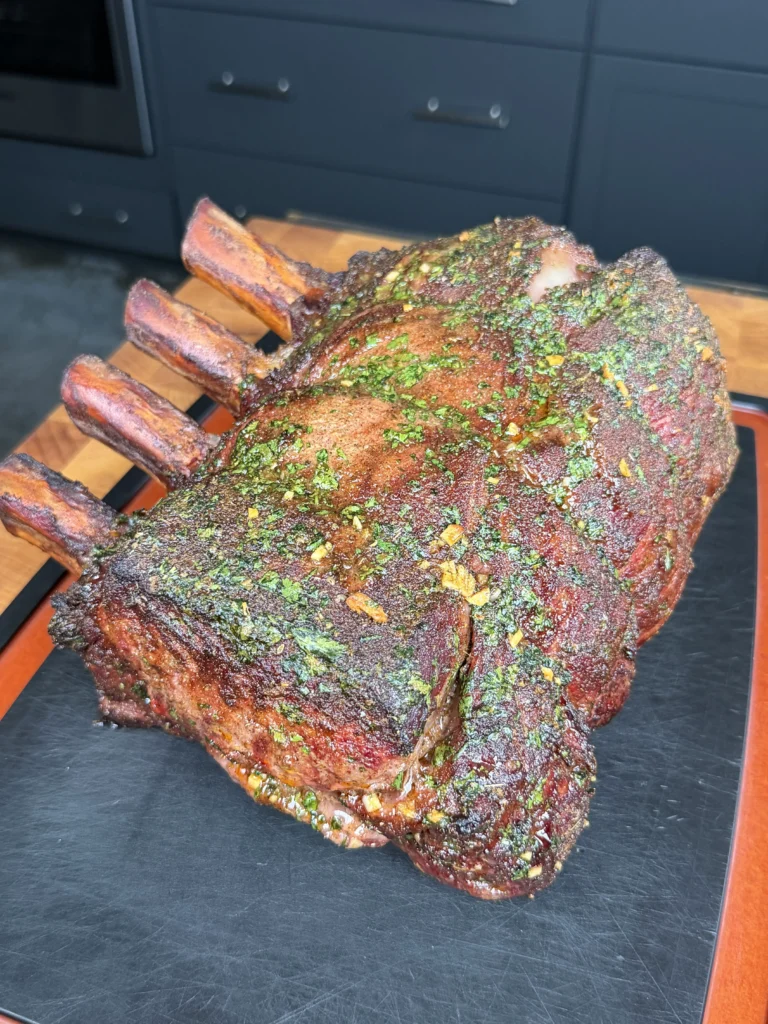
Step 6: The Sear. Remove the roast, crank the heat to 500 degrees, and sear for 7 to 10 minutes until the crust is dark and crispy. Rest for 25 to 35 minutes—you skip this, you lose the juice. Slice against the grain, arrange the deep pink slices, and drizzle with the warm Cajun honey butter. The result is a prime rib that delivers on flavor, juiciness, and presentation, leaving all other traditional methods in the dust.
❓ THE CLIFFHANGER: Is Your Butcher Hiding The Best Beef? ❓
This aggressive recipe demands the best cut of beef. Are you going to your typical grocery store, or are you upgrading? The biggest scandal is that most home cooks settle for mediocre beef that simply can’t handle this level of intense flavor injection and high-heat searing.
If you’re investing this much time and effort, you need premium, dry-aged beef with marbling that makes your mouth water. Don’t let a cheap cut ruin this culinary masterpiece. The prime rib you serve this holiday will either be a testament to your chaotic genius or a public shaming. The decision to inject, season, and sear is yours—but the secret is out, and there are no excuses left for serving a dry, bland roast.